
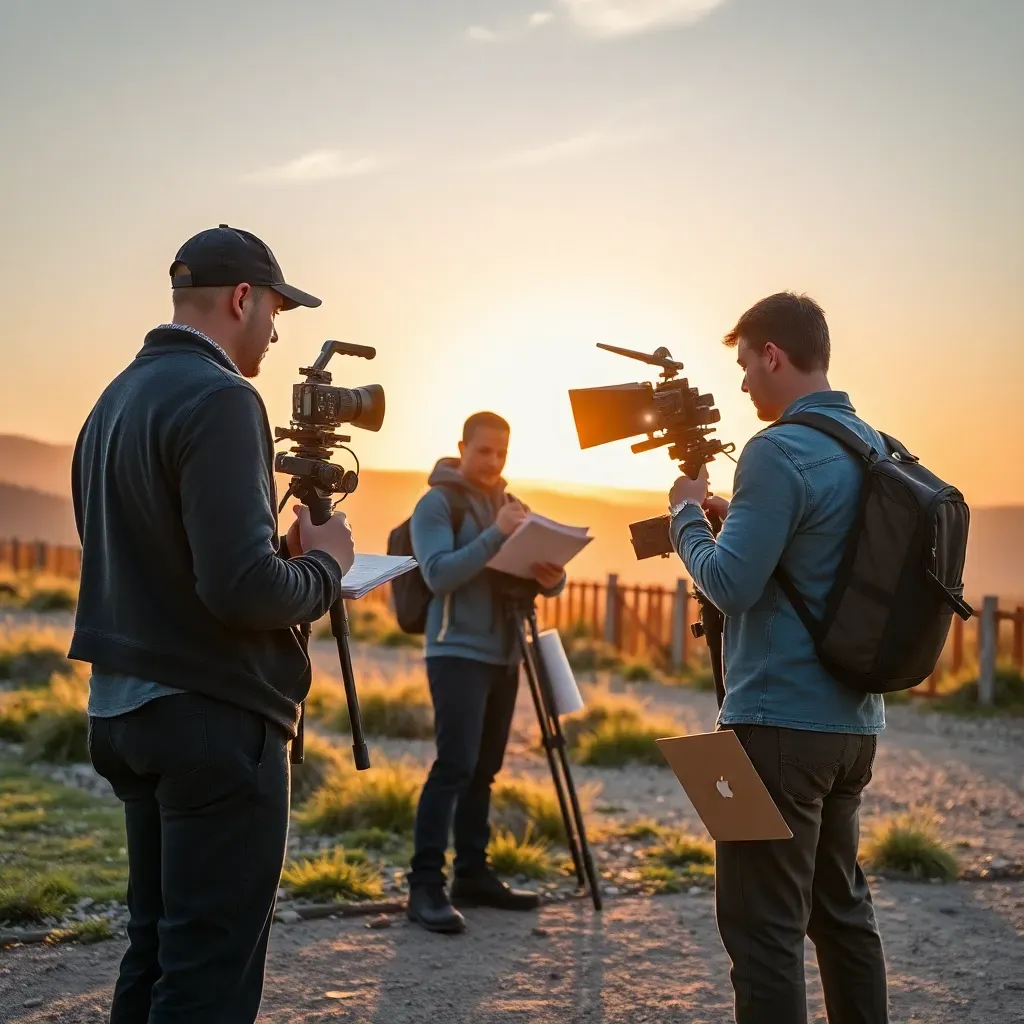
What Is a Film Fixer? The Complete Guide to Production Fixers
Why Poland's 30% cash rebate, world-class film school graduates, and centuries of layered architecture mean nothing without someone on the ground who knows the system inside out — and how a fixer fills that gap
Poland has spent the last decade quietly becoming one of Europe's most compelling filming destinations. The numbers help — a 30% cash rebate capped at PLN 15 million per project and PLN 20 million per beneficiary annually through the Polish Film Institute, crew rates that undercut Western Europe by a wide margin, and a talent pool fed by the legendary Łódź Film School. But numbers alone do not explain why shoots that arrive without a local fixer so often leave behind unfinished schedules and overspent budgets. The Polish film landscape is sophisticated and growing fast, yet it operates in Polish. Permit applications, city offices, heritage site approvals, crew negotiations, gear vendors — the entire ecosystem runs in a language that most visiting producers do not speak and through bureaucratic pathways that do not publish English-language guides. A film fixer bridges that divide. This guide explains what a fixer actually does, why Poland's specific production environment makes the role key rather than optional, how fixers differ from line producers and coordinators, what they cost, and how to choose the right one for your project.
As Fixers in Poland, we bring local expertise to international productions filming in Poland. Our team's deep knowledge of local regulations, crew networks, and production infrastructure ensures your project runs smoothly from pre-production through delivery.
ACT 01
What Is a Fixer?
The Local Expert Who Turns a Polish Production Plan into Reality
A film fixer is a local production pro who sets up the logistical, administrative, and cultural needs of a global shoot in their country. The word migrated into film from journalism, where foreign correspondents used local contacts to arrange access, translate conversations, and cut through red tape. In the context of Polish production, a fixer is the person who knows which Warsaw district office handles street closures. This Kraków heritage inspector must approve your shot list at Wawel Castle, and which Łódź sound stage has availability next month. They are not a luxury hire. They are the mechanism through which a foreign production actually functions on Polish soil.
- Fixers carry deep body-level knowledge of local rules, crew networks, gear vendors, and government processes
- They serve as the production's official local representative — the face and voice that authorities, vendors, and communities interact with
- Most Polish fixers are bilingual or multilingual, translating not just language but context, expectation, and pro culture
- The role scales from a single freelance coordinator to a full [shoot service firm](/services/) offering from start to finish support
How the Term Entered Filmmaking
Journalists covering conflict zones and foreign elections relied on local contacts who could 'fix' access problems — arranging interviews, handling military checkpoints, interpreting conversations in real time. When global film production expanded through the 1990s and 2000s, the same need emerged at a much larger scale. A journalist's fixer might arrange a single meeting. A production fixer in Poland sets up weeks of multi-department logistics involving imported gear, dozens of hired crew, city permits across many jurisdictions, and budgets denominated in a currency the producer may never have handled before. The word stuck because the core function stayed the same: making the impossible seem routine in unfamiliar area.
Individual Fixer vs Production Service Company
A person fixer is mostly a well-connected freelancer who gives planning, problem-solving, and translation. A shoot service firm is a registered Polish business offering the full package: crew employment, gear rental, accounting in PLN, insurance, permits, payroll, and production management. Many of Poland's best person fixers have grown into shoot service firms as the country's global shoots volume has surged — specific after the 30% rebates was introduced in 2019. For shoots pursuing the PISF incentive, working with a registered Polish entity is not just convenient. Certain rebates eligibility needs make it structurally needed.
ACT 02
What Does a Fixer Do?
The Full Scope of Fixer Responsibilities in Poland
The short answer is everything the visiting production cannot do for itself. The longer answer covers each phase of a shoot, from the first location scout to the final customs declaration on exported gear. Here is what that looks like in practice on Polish shoots.
- [Filming permits](/services/pre-production/film-permit-acquisition/) — handling Poland's city-level permit system, setting up with the Conservator of Monuments for heritage locations, and managing the distinct needs of each municipality
- [Crew sourcing](/services/film-crew/) — hiring from Poland's deep talent pool. This includes graduates of the Łódź Film School and skilled crew based in Warsaw, Kraków, and Wrocław
- Gear — arranging rental from Polish vendors, setting up ATA Carnet or customs clearance for imported gear, and sourcing backup gear when a lens cracks at 6 AM
- [Location scouting](/services/pre-production/location-scouting-services/) — matching creative briefs against Poland's extraordinary range of build style, from medieval Kraków to the post-industrial textures of Łódź and the Hansa port facades of Gdańsk
- Government and body-level liaison — serving as the production's point of contact with city offices, police, the Polish Film Institute, and heritage authorities
- Translation and cultural mediation — making sure that Polish crew, vendors, and officials know the production's needs and that the production knows Polish working norms
- Transport and lodging — organizing car logistics, hotel blocks, and daily crew movement across cities that do not always have the hotel capacity of Western European capitals
- PISF incentive planning — supporting the records, spend tracking, and compliance needs tied to Poland's 30% cash rebates
- Emergency problem-solving — from sudden weather shifts in the Tatra Mountains to a last-minute location withdrawal in central Warsaw
Pre-Production: Building the Polish Operation
Before a single frame is shot, the fixer constructs the local infrastructure the production needs to function. In Poland, this starts with permit research — each city manages its own filming permit process, and locations involving national heritage sites need separate approval from the Conservator of Monuments, a step that catches many first-time visitors off guard. The fixer identifies and applies through the correct channels, builds realistic timelines around approval cycles, and scouts locations that satisfy both the creative brief and the practical constraints of permits, parking, power supply, and neighborhood relations. At once, they source crew from Poland's strong talent base, negotiate gear rental in PLN, arrange lodging in cities where global-standard hotels may be concentrated in specific districts, and assemble a local budget that reflects actual Polish costs rather than Western European assumptions.
Production: The Operational Backbone
During the shoot, the fixer becomes the production's connective tissue on the ground. They manage relationships with city authorities and location owners, set up Polish crew alongside the visiting team, handle real-time translation between departments, and absorb the daily operational problems that global shoots create. In Poland specifically, fixers handle cultural expectations around working hours and meal breaks. Polish crew conventions differ from American or British norms — and manage communications with local police and traffic authorities when shoots affect public spaces. On documentary shoots, fixers arrange contributor access, give editorial context about Polish society and history, and serve as the cultural interpreter that sets whether a sensitive interview goes well or badly.
Incentive Administration and Legal Compliance
Poland's 30% cash rebates through PISF is one of Europe's most attractive incentives. But accessing it needs careful records of qualifying Polish expenditure — crew costs, gear rental, location fees, lodging, transport, and other eligible line items must be tracked, sorted, and reported according to PISF needs. A fixer or shoot service firm handles or sets up this process, often working with Polish accountants and legal advisors to make sure the production meets each eligibility criterion. Beyond the incentive, global shoots face Polish employment law needs when hiring local crew, customs rules for imported gear, insurance obligations, and VAT considerations that differ significantly from other EU countries. The fixer makes sure compliance across all of these areas.
ACT 03
When Do You Need a Fixer?
Five Scenarios Where a Polish Fixer Becomes Essential
Poland is not a country where you can wing it. The production infrastructure is strong, the talent is great, and the incentive is generous — but accessing all of that needs someone who operates natively within the system. Here are the situations where a fixer moves from helpful to indispensable.
- The production team does not speak Polish — and in Poland, most official processes operate exclusively in Polish
- You are pursuing the PISF 30% cash rebates and need a local entity to manage compliance and records
- The shoot involves heritage sites, public spaces, or many cities with distinct permit authorities
- The production needs large-scale crew hiring from Poland's competitive local market
- The timeline is compressed and there is no room for the learning curve of handling an unfamiliar system
The Language Barrier Is Real
Poland's younger generation increasingly speaks English. Crew in the film industry tend to have stronger English skills than the general population. But the systems a production must interact with — permit offices, city authorities, the Conservator of Monuments, gear rental firms, transport providers, catering suppliers — operate overwhelmingly in Polish. Official forms are in Polish. Phone calls with government offices happen in Polish. Lease agreements and insurance documents are drafted in Polish. A production that arrives expecting to handle these systems in English will hit a wall within the first 48 hours. The fixer eliminates that wall fully, handling each Polish-language interaction on the production's behalf while keeping the visiting team informed in English at each step.
Accessing the PISF Incentive
Poland's 30% cash rebate is capped at PLN 15 million per project and PLN 20 million per beneficiary annually and applies to qualifying Polish expenditure on film, television, and animation shoots. It is administered by the Polish Film Institute (PISF) and has been a major driver of global shoots growth since its introduction in 2019. But the application process, spend records, and compliance reporting all need detailed buy-in with PISF — in Polish, through set up channels, following specific procedures. Productions that attempt to manage this without local support risk records gaps that delay or reduce their rebates. A fixer or shoot service firm with PISF experience makes sure the application is structured correctly from day one and that each qualifying złoty of expenditure is well logged.
Multi-City Shoots and Complex Permits
A production that shoots in Warsaw, moves to Kraków, and finishes in Gdańsk is dealing with three separate city permit authorities, potentially three different heritage regulators, and three distinct sets of local crew and gear arrangements. Each Polish city has its own process, its own contacts, and its own expectations around lead time and records. A fixer who has worked across these cities carries set up relationships with the relevant offices, knows the differences in process, and can run parallel permit applications that would overwhelm a team trying to set up from abroad. This multi-jurisdictional complexity is one of the strongest arguments for engaging a Polish fixer early in pre-production.
ACT 04
Fixer vs Line Producer vs Production Coordinator
How the Roles Differ — and Where They Overlap
Global shoots frequently ask where the fixer's role ends and the line producer's starts. The question matters because mix-ups these boundaries leads to either duplicated effort or dangerous gaps in coverage. In the Polish context, the distinction has practical consequences for budget structure, crew hierarchy, and incentive compliance.
- A fixer gives territorial expertise — permits, crew, vendors, language, and cultural navigation specific to Poland
- A line producer manages the overall shoot budgets, schedule, and operational plan across all areas
- A production coordinator handles administrative workflows — call sheets, travel logistics, records, and crew communications
- On global shoots in Poland, all three roles often operate at once with clearly defined lanes
Where the Confusion Comes From
On a domestic production, the line producer handles many tasks that a fixer covers on a global shoot — hiring crew, managing budgets, setting up permits. The overlap is real. The difference is territorial knowledge. A line producer based in London or Los Angeles cannot call the Warsaw city permit office, negotiate day rates with a Polish gaffer in Polish, or explain to a heritage inspector why the production needs access to a covered courtyard. The fixer fills the local knowledge gap. On smaller global shoots in Poland, the fixer often functions as the local line producer — managing budget, crew, and logistics under the visiting producer's guidance. On larger shoots, the fixer works alongside a dedicated line producer, handling Polish-side execution while the line producer manages the global picture.
Structuring the Roles for Poland
For a small documentary crew — three to five people, a few days of shooting — a Polish fixer alone mostly suffices. They handle everything locally while the producer manages the project from home. For a mid-scale commercial or branded content shoot, you mostly need a fixer managing Polish logistics alongside a line producer or coordinator overseeing the wider schedule. For a feature film or series — specific one pursuing the PISF rebates — you need all three: a line producer managing the cross-border budget, a coordinator handling administrative workflows, and a Polish fixer or shoot service firm managing crew, permits, locations, gear, and incentive compliance on the ground. The fixer's scope expands with the production's complexity.
ACT 05
What Does a Fixer Cost?
Understanding Pricing for Film Fixer Services in Poland
Poland is significantly more cost-competitive than Western Europe for production services. But that does not mean fixer fees are trivial or standardized. Pricing depends on scope, length, production scale, and the complexity of what you need. Here is how the economics mostly work.
- Person freelance fixers charge day rates that reflect Poland's competitive cost structure compared to Western Europe
- Shoot service firms quote project-based fees covering the full scope of local planning, crew, and compliance
- For shoots pursuing the PISF rebates, fixer and production service fees mostly qualify as eligible Polish expenditure
- The cost of operating without a fixer — permit delays, crew miscommunication, incentive records gaps — always exceeds the fixer's fee
Day Rate vs Project Fee
A freelance fixer working on a day rate suits small shoots — a documentary crew of three to five people shooting for a few days, or a journalist needing local planning for a specific story. For anything beyond that, a shoot service firm gives better value because they bundle crew management, gear sourcing, permit processing, accounting, and incentive compliance into a single relationship. The project fee replaces many separate hires you would otherwise need. In Poland specifically, the project-fee model becomes key for shoots pursuing the 30% PISF rebates, because the shoot service firm manages the local accounting and spend records that the incentive needs.
What Drives the Price
Several factors shape what you will pay: the number of shooting days and the length of the pre-production buy-in, the number of cities involved (each adds permit and logistics complexity), the size of the crew being managed, whether heritage sites or complex public-space permits are needed, whether the production is pursuing the PISF rebates (which adds administrative scope), and whether specialized services like aerial filming planning, military liaison, or marine logistics are needed. Poland's lower cost base compared to France, Germany, or the UK means you get more production value per euro — but the fixer's fee should reflect the genuine scope of work, not an arbitrary discount.
Why the Investment Pays for Itself
A single lost shooting day on a global shoots costs far more than a fixer's entire buy-in. In Poland, the math is even more favorable because the fixer's services directly support access to the 30% PISF rebates — meaning the fixer effectively helps the production recover a substantial portion of its Polish spend. Beyond incentive access, skilled Polish fixers save money through local market knowledge: they know which gear vendors give the best rates. This crew members are worth their day rate, and which lodging options deliver genuine value. They also prevent the invisible costs — the permit that gets rejected because the application was filed incorrectly, the location that falls through because nobody explained the heritage approval timeline, the crew dispute that escalates because nobody translated the late hours policy.
ACT 06
How to Choose a Fixer
Six Criteria for Evaluating a Polish Production Partner
Poland's growing reputation as a production destination means the market has more fixers and shoot service firms than it did five years ago. That growth is positive, but it also means the quality range has widened. Here is how to identify a fixer who will genuinely deliver.
- Shown experience with shoots matching your format and scale — feature, documentary, commercial, or series
- A registered Polish business entity with production insurance, clear contracts, and transparent pricing in PLN
- Set up relationships with city permit offices, the PISF, and heritage authorities across key Polish cities
- Strong bilingual communication — fluent Polish for local operations, fluent English for client reporting
- Contactable references from recent global shoots that filmed in Poland
- Proactive honesty — a fixer who flags problems early rather than promising that everything is easy
Checking Track Record and References
Request a production list and look for work that matches your project in format, scale, and recency. A fixer with deep documentary experience may not be the right fit for a large-scale commercial campaign. Someone who has only worked in Warsaw may struggle with the distinct permit systems of Kraków or Gdańsk. Ask for references and actually contact them. The questions that matter most: how did the fixer handle unexpected problems? Was the budget accurate? Did they communicate proactively when issues arose? Would you hire them again? In Poland's relatively small production community, reputation is currency — a fixer with strong references has earned them through steady delivery.
Verifying Business Infrastructure
A reliable Polish fixer or shoot service firm should operate as a registered business — mostly a Polish sp. Z o.o. (tight liability firm) — with production insurance, employment law compliance, and the accounting infrastructure to handle local payroll and vendor payments in PLN. This matters above all for shoots pursuing the PISF rebates, where expenditure must flow through logged, compliant Polish channels. Ask for proof of sign-ups, insurance certificates, and a sample contract. Fixers who cannot give these basics are operating informally. This creates risk for your production and may disqualify certain expenditures from incentive eligibility.
Evaluating the Working Relationship Early
The inquiry and quoting phase tells you nearly everything about the working relationship ahead. Does the fixer ask detailed questions about your creative needs and logistical constraints, or do they quote a number at once? Do they suggest alternatives you had not considered — a better location, a more efficient schedule, a crew setup that saves money without sacrificing quality? Do they flag potential problems honestly? The best Polish fixers will tell you that your preferred Kraków location needs eight weeks of heritage approval lead time, that your budget assumption for crew rates is below market, or that your shooting schedule does not account for Polish public holidays. That kind of candor protects your production. A fixer who agrees with everything and promises no obstacles is either inexperienced or not being straight with you.
ACT 07
Real-World Examples of Fixers in Action
How Production Fixers Solve Problems on Polish Shoots
Theory explains the role. Practice shows its value. Here are three anonymized scenarios drawn from real Polish shoots that illustrate what a fixer brings to a global shoot — and what might have happened without one.
- Heritage permit rescue: securing Conservator approval for a covered Kraków location after a first rejection
- Crew surge: assembling a 30-person local crew across two cities within five business days for an accelerated commercial shoot
- Incentive recovery: restructuring a production's spend records to capture PISF rebates eligibility that was at risk
The Heritage Permit That Almost Killed the Schedule
A European feature production had selected a historic courtyard in Kraków's Old Town as a key location. Their first permit application — submitted directly in English — was rejected by the Conservator of Monuments, who needed a Polish-language application with specific records about protective measures for the heritage fabric. The production had three weeks until their scheduled shoot date and no local contacts in the Conservator's office. Our fixer resubmitted the application in Polish with the needed conservation plan, drew on an existing relationship with the Conservator's team to expedite review, and at once scouted and pre-permitted two alternative courtyards in case the original was not OK'd in time. The original location was OK'd within ten days. Without local intervention, the production would have lost the location fully and scrambled to redesign a pivotal scene.
Thirty Crew Members in Five Days
A global brand commissioned a commercial shoot split between Warsaw and Wrocław, then compressed the timeline by two weeks after a scheduling change on the client side. The production needed a full Polish crew — camera, lighting, grip, art department, wardrobe, hair and makeup, drivers, and production assistants — confirmed and contracted within five business days. Our fixer activated their crew network across both cities, drawing heavily on Łódź Film School alumni and set up freelancers who had worked on previous shoots. All thirty positions were filled within four days, with contracts issued in Polish and English, rates negotiated within the production's budget, and gear packages set up to match the visiting DP's specs. The shoot proceeded on the compressed timeline without a single crew gap.
Saving the PISF Rebate
A co-production shooting a tight series in Poland found mid-production that their accounting structure was not well logging qualifying Polish expenditure for the PISF 30% cash rebates. Certain crew payments had been processed through a non-Polish entity, gear rental invoices lacked the needed detail, and lodging costs had been booked through a global platform that did not create Polish VAT receipts. Our production service team restructured the accounting workflow, re-routed left payments through the Polish entity, worked with vendors to reissue compliant invoices, and compiled the full records package needed for the PISF submission. The production recovered the rebates on the vast majority of its qualifying spend — a six-figure sum that would have been lost without local intervention.
ACT 08
Common Questions
What is a fixer in the film industry?
A fixer in the film industry is a local production professional who facilitates international film, television, and media productions shooting in their country. In Poland, fixers handle logistics including filming permits through municipal authorities and the Conservator of Monuments, crew sourcing from Poland's strong talent base, equipment rental, location scouting across cities like Warsaw, Kraków, and Łódź, translation between Polish and English, and coordination with the Polish Film Institute for incentive compliance. The term comes from journalism, where foreign correspondents relied on local contacts to arrange access and navigate unfamiliar systems.
What does a film fixer do?
A film fixer manages every local logistical requirement of an international production. In Poland, this includes securing city-level filming permits and heritage approvals, hiring local crew from Poland's excellent talent pool, arranging equipment rental from Polish vendors, scouting locations that match creative briefs across Poland's diverse architectural landscape, liaising with municipal authorities and police, translating between Polish-speaking officials and English-speaking production teams, organizing transport and accommodation, managing local budgets in PLN, and supporting PISF 30% cash rebate documentation. The fixer's involvement typically spans from early pre-production through post-shoot wrap.
How much does a fixer cost?
Fixer costs in Poland vary based on the production's scale, duration, number of cities involved, and scope of services required. Poland is significantly more cost-competitive than Western European markets like France or Germany, offering strong value for international productions. Individual fixers charge day rates, while production service companies quote project-based fees covering full local coordination. For productions pursuing the PISF 30% cash rebate, fixer and production service fees typically qualify as eligible Polish expenditure — meaning the incentive effectively reduces the net cost. The most reliable approach is to share your full project brief and receive an itemized quote.
What is the difference between a fixer and a line producer?
A fixer provides territorial expertise specific to Poland — local permits, crew sourcing, Polish-language communication, vendor relationships, heritage authority liaison, and PISF incentive support. A line producer manages the overall production budget, schedule, and operational execution across all territories. On domestic productions, the line producer covers many tasks a fixer handles internationally. The distinction is local knowledge: a line producer from London cannot negotiate with Warsaw's permit office in Polish or explain heritage protection requirements to a Kraków inspector. On large international shoots in Poland, both roles work in parallel — the line producer managing the global picture, the fixer executing everything on the ground.
Do I need a fixer for a small shoot?
In Poland, even small shoots benefit substantially from a fixer. The primary reason is language: Polish municipal offices, equipment vendors, location owners, and transport providers operate in Polish, and permit applications must be submitted in Polish. A small documentary crew that speaks no Polish will struggle to accomplish basic logistics without local support. The cost of a fixer for a small Polish production is modest relative to Western European markets, and a single prevented problem — a permit rejection, a miscommunication with a heritage authority, a logistical failure — typically justifies the fee many times over. If your team speaks fluent Polish and has existing local contacts, you may manage without one. Otherwise, the fixer is essential even at small scale.
How do I find a fixer in Poland?
Start with established production service companies that have a registered Polish business entity, verifiable production track records, and production insurance. The Polish Film Institute (PISF) and regional film commissions — including the Kraków Film Commission and Łódź Film Commission — can provide recommendations. Industry contacts who have filmed in Poland are another reliable source. When evaluating candidates, request an itemized quote, check references from recent international productions of similar scale, confirm the fixer operates as a registered Polish company (sp. z o.o.), and verify their experience with PISF incentive documentation if you plan to pursue the rebate. Our team at Fixers in Poland provides comprehensive production services across every major Polish filming region.
Ready to Roll
Need a Fixer for Your Polish Production?
Whether you are scouting Kraków's medieval streets, building a crew in Warsaw, navigating the PISF 30% rebate, or coordinating a multi-city shoot across Poland's diverse filming regions, our team handles the local logistics so you can focus on the creative work. We operate as a registered Polish production service company with established relationships across every major filming city. Contact Fixers in Poland to discuss your next project.